The Gist: Most parents wait too long to bring their child to the dentist, often until a problem appears. But current guidelines from pediatric dental associations recommend a first dental visit by age one or when the first tooth erupts. Early visits set lifelong oral health habits, catch developmental concerns early, and make dentistry a normal, positive part of your child’s life from the very beginning.
When Should Your Child Have Their First Dental Visit? A Parent’s Complete Guide
Parenting comes with an overwhelming number of firsts, and the first dental visit is one that surprises a lot of parents with its timeline. Many people assume their child doesn’t need a dentist until they have a full set of baby teeth, or even until their permanent teeth start coming in. That’s actually much later than the recommended starting point, and the gap between common assumption and professional guidance has real consequences for children’s oral health.
So let’s settle the question clearly: when should your child have their first dental visit? The short answer is earlier than you probably think. And understanding the reasoning behind that recommendation makes it a lot easier to act on.
The Official Guideline: First Tooth or First Birthday
The Canadian Dental Association and the American Academy of Pediatric Dentistry both recommend that children have their first dental visit within six months of their first tooth erupting, or by their first birthday, whichever comes first. That might feel surprisingly early, especially when your child only has one or two tiny teeth. But there’s solid reasoning behind this timing.
Baby teeth begin erupting around six months of age, and even before a full set is present, those first teeth are vulnerable to Early Childhood Caries, also known as baby bottle tooth decay. This happens when sugary liquids pool around teeth during feeding routines. It can develop rapidly and cause significant damage to teeth that are still years away from falling out naturally.
An early dental visit catches these risks and gives parents the guidance they need to prevent them before any damage occurs.
What Happens at a First Pediatric Dental Visit?
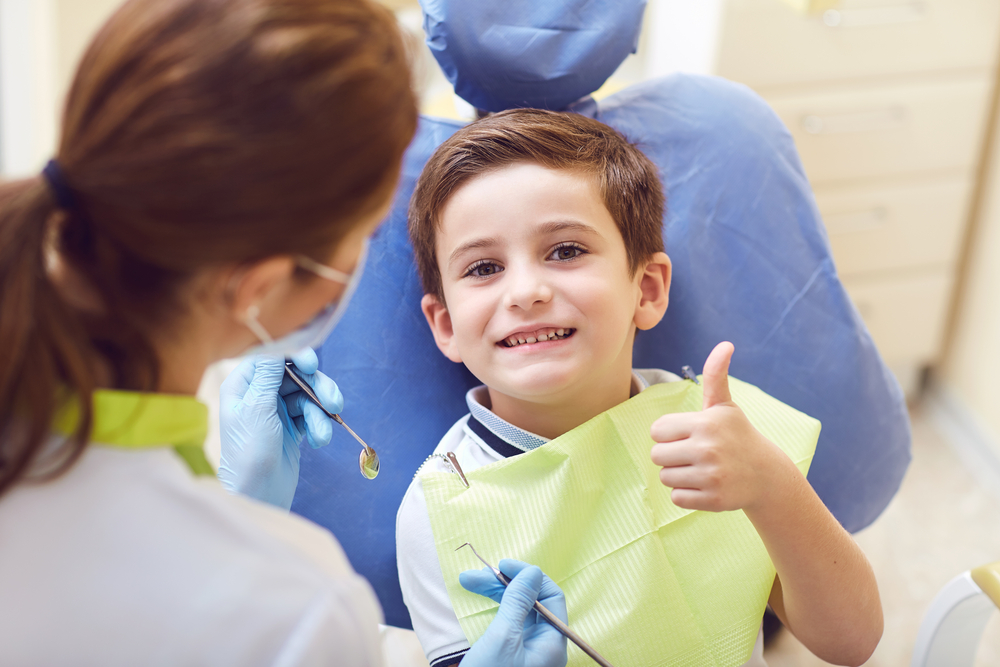
The first appointment is gentle, brief, and largely about orientation for both the child and the parents. Our family and kids dentistry page explains our approach in detail. Here’s what typically takes place during a first visit:
- A gentle examination of your child’s teeth, gums, jaw, and bite development
- Assessment of oral habits like thumb sucking, pacifier use, or bottle feeding at night
- Guidance on brushing techniques appropriate for your child’s age and stage
- Discussion of diet and its impact on developing teeth
- Answering parent questions about what to expect as more teeth emerge
The visit is also about familiarizing your child with the dental environment, the sounds, the chair, and the friendly faces. Children who start visiting the dentist early tend to develop a sense of comfort and normalcy around dental care that stays with them into adulthood.
Why Baby Teeth Matter More Than Most Parents Realize
Here’s a common misconception: baby teeth are just placeholders, so it doesn’t matter much if they get cavities because they’ll fall out anyway. This is one of the most widespread and potentially harmful dental myths out there.
Baby teeth serve critical functions. They allow children to chew and eat properly, supporting nutrition and healthy development. They help children form speech sounds correctly, and significant gaps from early tooth loss can affect language development. They also hold space in the jaw for the permanent teeth that will eventually replace them. When a baby tooth is lost prematurely due to decay or infection, surrounding teeth shift, which can lead to crowding, misalignment, and orthodontic issues requiring significant treatment later.
Treating a cavity in a baby tooth isn’t just about that tooth. It’s about protecting the entire developmental trajectory of your child’s smile.
Building Positive Dental Habits from the Start
One of the most powerful things early dental visits do is establish dentistry as a routine, non-threatening part of life. Children who begin visiting the dentist at age one or two don’t develop the association between dental visits and fear or pain. To them, it’s just a regular appointment.
Contrast that with the child who has their first dental visit at age five or six, potentially because a problem has developed. That first experience is now associated with discomfort, unfamiliar sensations, and the stress of an urgent situation. It’s no wonder that dental anxiety in adults so often traces back to difficult early experiences.
At Delta Dentist in Delta, BC, the approach to pediatric dentistry is specifically designed to make young patients feel welcome, safe, and at ease. Creating positive early experiences isn’t just nice to have. It shapes how your child relates to their oral health for decades to come.
What Parents Should Be Doing at Home Before and Between Visits
Dental care at home starts before teeth even appear. Gently wiping your infant’s gums with a clean, damp cloth after feedings removes bacteria and prepares the mouth for tooth care. Once the first tooth erupts, switch to a soft infant toothbrush with a rice-grain-sized amount of fluoride toothpaste.
As your child grows, the at-home routine evolves:
- Ages 0 to 2: rice-grain-sized fluoride toothpaste, twice daily brushing by a parent
- Ages 3 to 6: pea-sized amount of fluoride toothpaste, still assisted by a parent
- Ages 6 to 8: transition to more independent brushing with parental supervision and flossing when teeth touch
- Ages 8 and up: independent brushing and flossing habits with regular parental check-ins
Consistency at home between dental visits is what makes the biggest difference in long-term oral health outcomes for children.
How to Find a Dental Practice That’s Great with Kids
Not all dental offices are created equal when it comes to young patients. What you’re looking for is a practice that has genuine experience with children, uses child-friendly language, takes a slow and patient approach, and treats reluctant children with understanding rather than frustration.
A good pediatric dental experience involves the whole family. The dentist explains things to both the child and the parent, answers questions without making anyone feel rushed, and gives children a sense of agency in what’s happening. That respectful approach is what builds trust and cooperation over time.
When Should Your Child Have Their First Dental Visit? Here’s the Answer
Early, consistent, positive dental visits aren’t a luxury; they’re a foundation. They protect your child’s developing teeth, catch issues while they’re still small, and set up a lifetime of healthy habits that will serve them long after those baby teeth are a distant memory.
Every year you wait past the recommended starting point is a year of opportunity missed. Book your child’s first appointment at Delta Dentist and give their smile the strong, healthy start it deserves.
Frequently Asked Questions
At what age should a child first see a dentist?
By their first birthday or within six months of the first tooth erupting, whichever comes first. This is the recommendation from both Canadian and American pediatric dental associations.
What if my child cries or is scared at their first dental visit?
This is completely normal, especially for very young children. Experienced pediatric dental teams are well-prepared to handle it calmly and gently, without rushing or forcing.
How often should children visit the dentist?
Typically every six months, though your dentist may recommend more or less frequent visits depending on your child’s individual risk profile and oral development.
When should kids start brushing their own teeth?
Children typically develop the dexterity to brush effectively on their own around age 6 to 8, but parental involvement and supervision are valuable well into the preteen years.
Are dental X-rays safe for children?
Yes. Modern digital dental X-rays use extremely low radiation doses. They’re essential for monitoring tooth development and catching cavities between teeth that aren’t visible during an exam.
What should I do if my child has a toothache?
Contact your dental office promptly. Children’s toothaches can indicate cavities or infection that need professional attention. Don’t wait to see if it resolves on its own.
Conclusion
The earlier your child begins their dental journey, the better the outcomes across every measure, from cavity prevention to orthodontic health to lifelong comfort with dental care. When should your child have their first dental visit? The answer is sooner than most parents expect, and with far less drama than they fear. If your little one hasn’t had their first dental checkup yet, there’s no better time than now. Book a visit at Delta Dentist in Delta, BC and give your child’s smile the strong, healthy start it deserves.