Key Insight: A dental crown is often recommended when a tooth is too damaged, cracked, or weakened to hold up with a regular filling. Warning signs include significant pain when biting, visible cracks, a large or failed filling, or a tooth that has undergone root canal treatment. Waiting too long to address these signs can lead to fracture, tooth loss, and far more complex and expensive treatment down the line.
Why Timing Matters More Than You Think
Most patients do not walk into a dental office eagerly anticipating a crown. They tend to come in because something has changed, a filling feels different, a tooth aches under pressure, or a piece of tooth has broken off. By the time these symptoms appear, the window for the simplest and most conservative treatment has often already passed.
Understanding the signs that a dental crown may be needed, and what happens to the tooth if those signs are ignored, is the kind of knowledge that can save you from more invasive treatment, higher costs, and the stress of a dental emergency.
What Is a Dental Crown and What Does It Do?
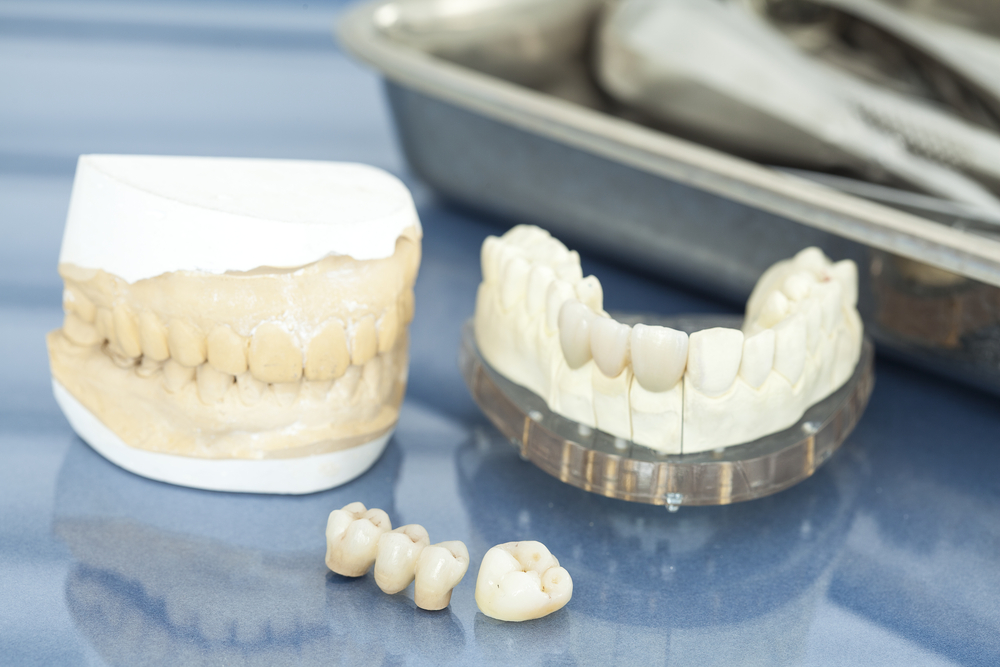
A dental crown is a custom-fitted cap that encases the entire visible portion of a tooth above the gum line. It protects a tooth that is too damaged for a filling to adequately restore, reinforces a cracked tooth to prevent further fracture, and restores the shape, strength, and function of a tooth that has been compromised by decay, injury, or previous dental work.
At Delta Dentist, crowns are made from high-quality materials selected for the specific needs of each tooth, whether that is the natural appearance of all-ceramic porcelain for front teeth or the additional strength of zirconia for molars that bear heavy chewing forces.
Signs You Might Need a Dental Crown
The following signs are worth discussing with your dentist promptly:
- Pain when biting or chewing: Sharp pain triggered by pressure can indicate a cracked tooth or severe decay that has compromised the tooth’s structural integrity.
- A large or failing filling: When more than half of a tooth is filled material, a crown provides better long-term protection than another filling.
- A cracked or fractured tooth: Hairline cracks may be invisible but cause significant pain. Visible fractures require immediate attention to prevent complete tooth loss.
- Severe tooth decay: Decay that is too extensive for a filling to address adequately may require crown coverage after the decay is removed.
- After a root canal: The treated tooth becomes more brittle and vulnerable to fracture without a crown to protect it.
- A worn-down tooth: Teeth severely worn by bruxism or acid erosion may require a crown to restore proper height and function.
Signs You Might Need a Dental Crown: What Happens If You Wait?
This is the part that most patients do not fully appreciate until it happens to them. A cracked tooth that needs a crown but does not receive one continues to fracture under the daily forces of chewing. What started as a repairable crack can deepen to the point where the tooth splits completely or the fracture extends below the gum line, at which point extraction may be the only option.
Similarly, a tooth with a large failing filling that is left without proper coverage can break catastrophically during a meal, potentially requiring emergency treatment. A tooth that received a root canal but no crown is at significantly elevated risk of vertical root fracture, a complication that almost always results in extraction.
The pattern is consistent: early treatment with a crown is predictable and straightforward. Delayed treatment often means a more complex procedure, or the loss of the tooth altogether.
What to Expect During Crown Treatment
Getting a dental crown at Delta Dentist typically involves two appointments. At the first, the tooth is prepared by removing a thin layer of enamel to create space for the crown, an impression or digital scan is taken, and a temporary crown is placed while your permanent crown is custom-fabricated in a dental laboratory. At the second appointment, the temporary is removed and the final crown is checked for fit, bite, and shade before being permanently cemented.
The entire process takes two to three weeks and is performed comfortably under local anaesthetic. Most patients experience minimal sensitivity in the days following preparation, which resolves quickly.
Frequently Asked Questions
How do I know if a crown is urgent?
If you have visible fractures, severe pain when biting, or a large piece of tooth has broken off, seek dental attention promptly. Delaying these situations significantly increases the risk of tooth loss.
Can a crown be placed on any tooth?
Crowns are suitable for both front and back teeth. Material selection will differ based on the location and function of the tooth.
How long does a dental crown last?
With proper care, dental crowns typically last ten to fifteen years or longer. Good oral hygiene and regular dental check-ups are essential for maximising crown longevity.
Will my crown look natural?
All-ceramic and zirconia crowns are matched to the shade of your surrounding teeth and are virtually indistinguishable from natural teeth in most lighting conditions.
Is there an alternative to a crown?
In some cases, inlays or onlays offer a more conservative option for moderately damaged teeth. However, when a crown is clinically indicated, alternatives may not provide adequate protection.
What happens if a crowned tooth develops decay?
Decay can still form at the margin where the crown meets the tooth. This is why regular cleanings and good oral hygiene remain essential even after crown placement.
Conclusion
A dental crown is not a cosmetic extravagance. It is often a clinically necessary restoration that protects a vulnerable tooth from a fate that is significantly more difficult and expensive to manage. Knowing the warning signs and acting on them promptly is the difference between a straightforward crown placement and a tooth extraction followed by an implant or bridge.
If any of the signs described in this article sound familiar, do not wait. Book an appointment at Delta Dentist today and let Dr. Sara Rouhani assess whether a crown is the right next step for your tooth.